

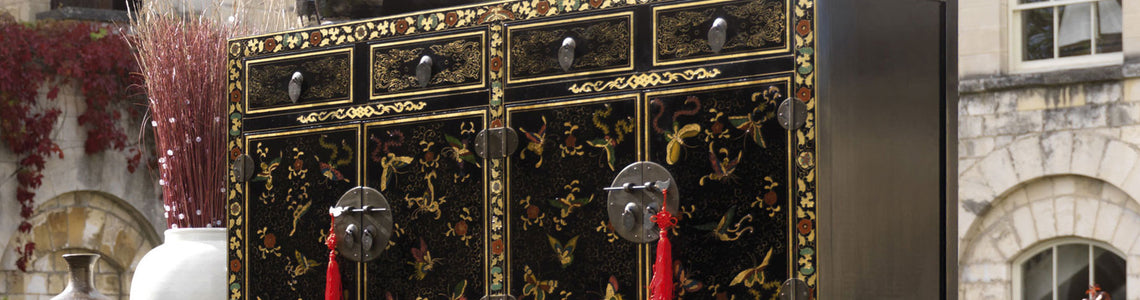
Chinese Painted Cabinets: Character and Appeal
A Chinese painted cabinet brings colour and narrative into a room in a way that few other pieces of furniture can manage. Unlike plain timber or lacquered surfaces, painted cabinets were intended to be seen, handled, and lived with. They combine practical storage with decoration that reflects regional traditions and everyday symbolism rather than status or display alone.
At Shimu, Chinese painted cabinets are valued for this balance. The best examples feel confident without being loud, their decoration sitting comfortably on well-proportioned forms. Whether used as a statement piece in a living space or as functional storage in a hallway or bedroom, a painted cabinet introduces warmth and individuality while remaining grounded and useful. Chosen carefully, it becomes part of the fabric of a home rather than an isolated decorative object.
Hand Painted Chinese Cabinets: Craft Process and Regional Traditions
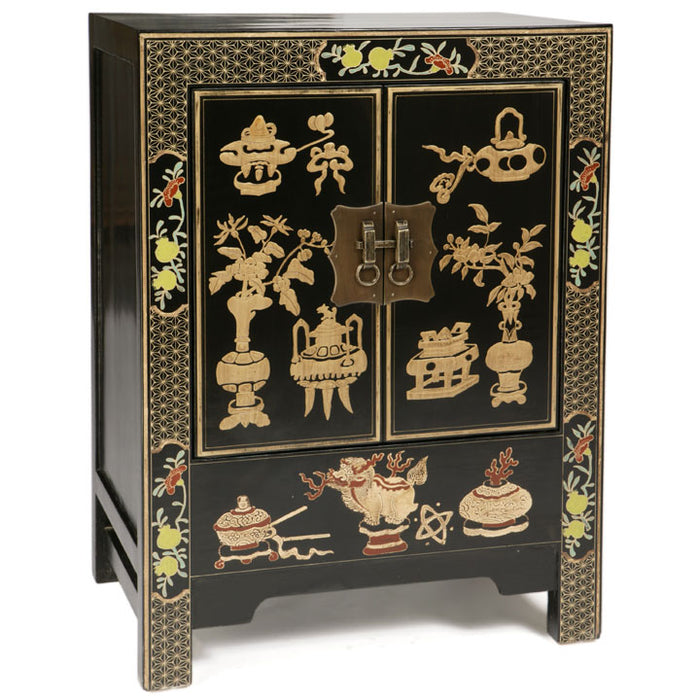
A hand painted Chinese cabinet begins with the structure, not the decoration. Cabinets were built first for strength and daily use, typically from elm or similar regional timbers. Once assembled, surfaces were prepared with layers of ground to create a stable base for painting. Only then was colour applied.
Painting was done entirely by hand, usually by craftsmen familiar with established motifs rather than working from strict patterns. This allowed for variation and confidence of line. Flowers, foliage, birds, and simple landscape elements were painted freehand, with an understanding that minor irregularities added life rather than detracted from the result. These cabinets were never intended to be identical.
Regional traditions played a strong role. In northern areas such as Shanxi, painted furniture became particularly popular, with muted backgrounds and controlled palettes designed to age gracefully. Over time, paint softens, edges blur slightly, and colours settle, giving a hand painted Chinese cabinet the quiet depth that machine-finished pieces struggle to replicate.

Traditional Chinese Painted Furniture: History, Purpose, and Use in the Home
Traditional Chinese painted furniture developed from practical household needs rather than courtly display. In many regions, especially across northern China, painting furniture served two purposes. It protected the timber beneath and brought colour into homes that were otherwise restrained in their use of materials. Cabinets, chests, and cupboards were painted because they were used daily, not because they were ceremonial objects.
Painted cabinets often formed part of a wider group of traditional Chinese painted furniture within a household. The decoration was intended to be familiar and reassuring, drawing on shared visual language rather than personal expression. Colours were chosen to sit well with clay floors, plastered walls, and natural light, allowing the furniture to belong to its surroundings.
At Shimu, this sense of purpose is what distinguishes good painted furniture. The best pieces feel settled, their decoration supporting function rather than competing with it, which is why they continue to work so naturally in modern homes.
Floral Painted Chinese Cabinet: Motifs, Colour, and Meaning
A floral painted Chinese cabinet reflects a long-standing preference for natural themes that suggested continuity and renewal. Flowers were among the most common motifs, not for decorative excess, but for their familiarity and balance. Peonies, chrysanthemums, and stylised blossoms appeared regularly, often arranged with foliage to soften the overall composition.
Colour palettes were typically controlled. Backgrounds in muted blues, greens, creams, or soft reds allowed floral details to stand out without overwhelming the surface. Over time, these colours mellow, edges soften, and the painted surface gains depth. This ageing process is central to the appeal of a floral painted cabinet, giving it a sense of calm authority.
Rather than demanding attention, floral painted cabinets reward living with them. Their decoration reveals itself gradually, which is why Shimu selects pieces where wear and fading enhance the character rather than diminish it.
Using a Chinese Painted Cabinet in Modern Interiors
A Chinese painted cabinet works best when it is allowed to breathe. Placed against neutral walls, its colours and motifs can be read clearly without competition. In living rooms or dining spaces, it often serves as a focal point, while in hallways or bedrooms it brings warmth and individuality without requiring additional decoration.
Because painted cabinets already carry visual interest, surrounding furniture should remain calm. Natural wood, plain upholstery, and restrained lighting help the cabinet feel integrated rather than staged. Painted pieces also benefit from natural light, which reveals surface texture and softens colour during the day.
Many Shimu clients mix painted cabinets with elm furniture or subtle lacquer pieces, creating interiors that feel layered, personal, and comfortable to live with.
A Chinese painted cabinet offers more than storage. It brings colour, history, and quiet confidence into a home, rewarding long-term use rather than immediate impact. When chosen with care, it becomes part of daily life rather than an occasional talking point.
Black Lacquer Furniture
|
Blue and White Ginger Jar
|
Chinese Artwork
|
Chinese Tableware
|
Buddha Head
|
Green Chinese Ginger Jar
|
Chinese Blue Lamp
|
Oriental Rugs
|
Oriental Cabinet
|
Chinese Sideboards
|
Mango Furniture
|
Chinese Furniture
|
Chinese Buddha
|
Blue Chinese Rug
|
Large Buddha Statue
|
Chinese Temple
|
Dragon Necklace
|
Second Hand Chinese Furniture
|
Chinese Coffee Tables
|
Chinese Medicine Cabinet
|
Chinese Armoire
|
Chinese Furniture Birmingham
|
Chinese Furniture Glasgow
|
Chinoiserie
|
Chinese Lanterns
|
Chinese Figurines
|
Calligraphy Brushes
|
Chinese Lamp Shades
|
Modern Chinese Interior Design
|
Old Antique Wooden Boxes
|
Chinese Console Tables