


Chinese Lion: History, Symbolism and Decorative Traditions
At Shimu, we are often asked about the history and meaning of the Chinese lion. Known as guardian lions, these figures are central to Chinese culture and decorative arts. They are not based on native animals, as lions are not indigenous to China, but entered Chinese tradition through contact with Asiatic lions from Central Asia and Persia. The very word for lion in Chinese is derived from a Persian word, reflecting the influence of trade and cultural exchange along the Silk Road.
Over centuries, the Chinese lion became a familiar figure across the country. Whether placed outside temples, imperial palaces or homes, these lion figures served as protectors. Today, Chinese lion statues remain popular as decorative pieces, appreciated for their craftsmanship but also for their strong cultural symbolism.
Origins of Chinese Guardian Lions
The tradition of the Chinese lion guardian can be traced back to the Han dynasty. Lions were first introduced to China as tribute animals, and their unfamiliar appearance made a strong impression. Over time, the lion became associated with strength and protection, qualities that were valued in both spiritual and practical settings.
Guardian lions began to appear in Buddhist temples, often standing at the entrance to protect the building from evil spirits. Although these stone lions were decorative, they carried spiritual meaning and were believed to guard sacred spaces. The association between lions and Buddhism also links back to India, where lions symbolised strength and were often used as guardians of religious sites.
Development Through Chinese History
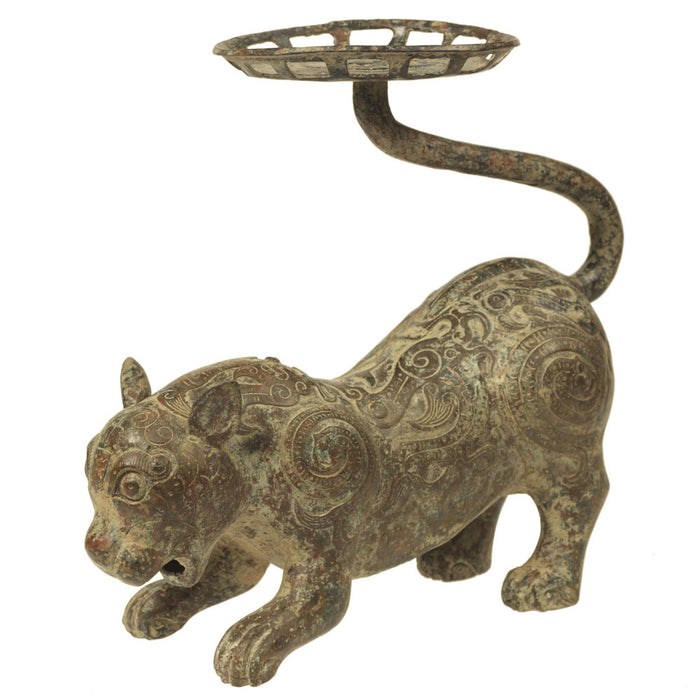
The form and style of guardian lions changed across dynasties. During the Han dynasty, stone lions were simple in design, often with stylised features. By the Ming dynasty, the figures became larger and more detailed, with elaborate manes, flowing fur and carefully carved expressions. In the Qing dynasty, bronze lions became more common, showing the continuation of the tradition in different materials.
Throughout these periods, guardian lions were placed outside palaces, tombs, temples and homes of the elite. They served as both protectors and signs of status, reflecting the wealth and influence of the owner. Symbolism of Male and Female Lions
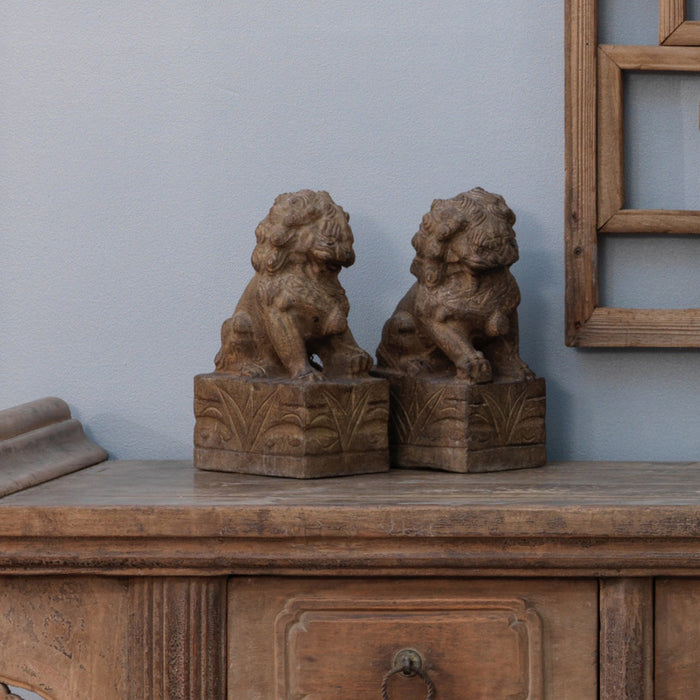
A distinctive feature of the Chinese lion statue is the pairing of male and female lions. The male lion is usually shown with a ball under one paw, symbolising strength and the protection of the outside world. The female lion is shown with a cub under her paw, representing nurture and the protection of the household.
These paired lions are typically placed at entrances, with the male on the right and the female on the left when facing outwards. Together, they balance strength and care, forming a complete symbol of protection.
Foo Dogs and the Lion Dog Tradition
Outside China, guardian lions are often called foo dogs or food dogs. This term comes from a misunderstanding of the word “fu,” which means happiness or blessing in Chinese. The term “foo dogs” or “lion dog” is commonly used, but these figures are always lions, not dogs.
The description as lion dogs may also link to their stylised appearance. Chinese artisans often blended features of lions with those of local animals, leading to figures with dog-like characteristics. Regardless of the name, the meaning remains the same, with these figures serving as powerful protectors.
Guardian Lions in Temples and Palaces
Chinese lion guardians were especially common at Buddhist temples, where they were positioned at entrances to protect the building. Stone lions stood as barriers against evil spirits, ensuring that the temple remained a sacred place. The same tradition extended to imperial palaces and the homes of high-ranking officials, where the lions became symbols of status as well as guardianship.
Some lions were carved from stone, while others were cast in bronze. A bronze lion was often placed in particularly important locations, its metallic surface polished to reflect the light. These lions were seen as both works of art and statements of authority.
Mouth Open and Mouth Closed
One common detail in guardian lion design is the mouth. Typically, one lion has its mouth open while the other has its mouth closed. This represents the sounds “a” and “um,” the beginning and end of the Sanskrit alphabet. Together, they symbolise the cycle of life, from beginning to end.The open mouth also signifies a warning to drive away evil spirits, while the closed mouth keeps positive energy within. This combination reinforces the idea of balance that runs through Chinese culture.
The Influence of Asiatic Lions and Tibetan Snow Lions
The Chinese guardian lion has links to both real and mythical animals. Asiatic lions, which once roamed parts of India and Persia, inspired the earliest images. Over time, Chinese artisans reinterpreted these lions, blending them with local symbols.In Tibetan culture, the snow lion became a mythical creature associated with power and the mountains. This figure shares qualities with the Chinese guardian lion, reflecting the shared Buddhist traditions that spread across Asia. The Tibetan snow lion represents strength and joy, while the Chinese lion emphasises protection and guardianship. Guardian Lions in Modern Chinese Culture
In modern times, Chinese lion statues are still widely used. Stone lions continue to stand outside important buildings, while smaller versions are placed in homes and gardens. They are seen as decorative objects and as symbols of continuity with Chinese culture.
At Shimu, we offer Chinese lion statues that reflect this long tradition. Each lion figure is carefully crafted, whether in stone, wood or cast materials. These pieces provide both decoration and cultural meaning, making them ideal additions to modern interiors.
Nkuku Throws | Chinese Wood Panel | Chinese Wardrobes | Chinese Wardrobe Cabinet | Chinese Wall Art | Oriental Trunk | Oriental Stoneware | Chinese Storage Chests | Chinese Antique Dealers London Wooden Buddha Statues | Black Lacquer Furniture | Chinese Tableware