

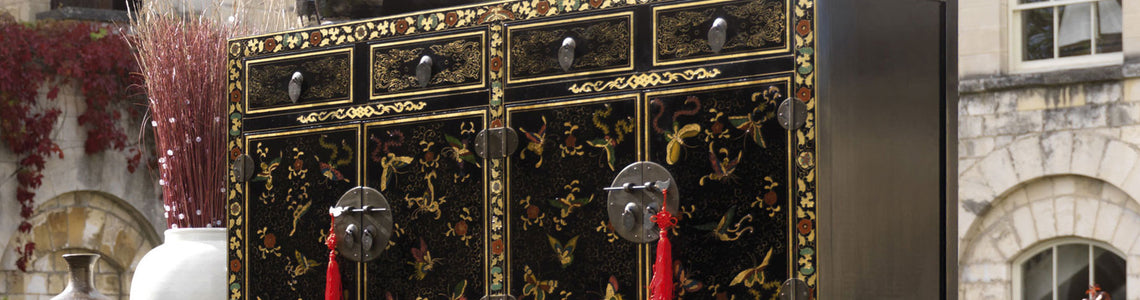
Shanxi Cabinet
A Shanxi cabinet holds a distinct place in the history of Chinese furniture. Originating in northern China’s Shanxi province, these pieces are known for their bold painted finishes, practical form and decorative character. Unlike the restrained hardwood furniture associated with the Ming tradition, the painted Chinese cabinet developed with a more expressive regional identity, often carrying rich colour, symbolic imagery and a presence that commands attention in a room.
At Shimu, the appeal of the Shanxi cabinet lies not simply in its appearance but in the craftsmanship behind it. Many original pieces were made in elm and finished in layers of lacquer, then decorated by hand with motifs intended to suggest prosperity, longevity or harmony. These qualities make them as compelling in a contemporary home as they were in traditional Chinese interiors.
Today a Shanxi cabinet can serve equally well as practical storage or as a statement piece. Whether used in a hallway, bedroom or living space, the combination of painted finish and aged patina brings warmth and depth. Shimu’s Shanxi Painted Furniture collection reflects this enduring appeal, offering carefully selected pieces rooted in authentic regional tradition.
The Craft and Symbolism of Shanxi Painted Furniture
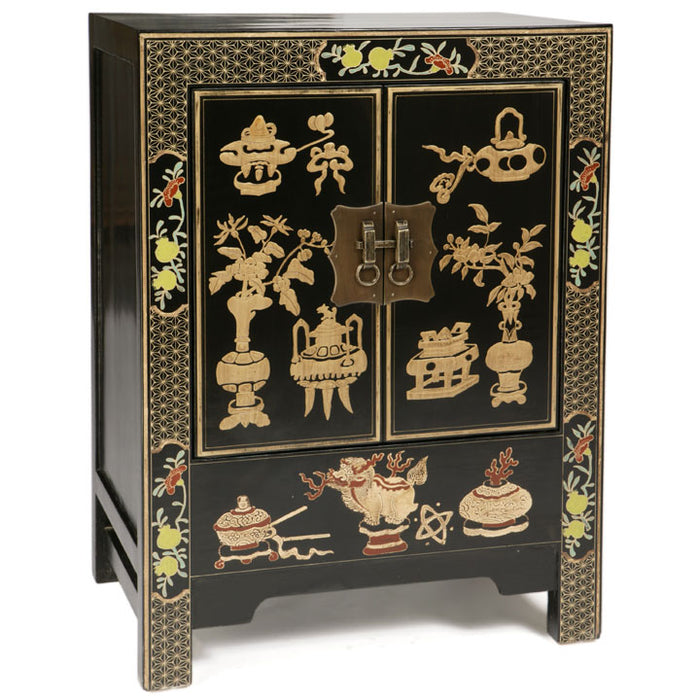
Shanxi painted furniture is distinguished by a decorative language all its own. Traditional examples often feature layers of red, black or deep ochre lacquer, with hand-painted motifs ranging from peonies and lotus flowers to birds, scholars’ scenes and mountain landscapes. These were not applied merely for ornament. In Chinese decorative tradition, imagery carried meaning, with symbols chosen to convey good fortune, status or blessings for family life.
The making of a fine painted cabinet required considerable skill. Timber had to be seasoned and assembled using traditional joinery, after which lacquer was built up in successive layers before decoration was added. The result was a surface with both depth and resilience. Over time, use and age soften these finishes, creating the worn character and patina so valued in antique pieces.
What sets Shanxi work apart is its regional boldness. Where classical hardwood furniture often relies on line and proportion, Shanxi painted furniture introduces colour and narrative. That is one reason these cabinets sit so comfortably in modern interiors, where they can provide contrast against simpler furnishings.
Shimu has long specialised in sourcing and restoring pieces that preserve this original character. Alongside painted cabinets, collectors often pair them with related Chinese antique furniture, allowing a room to carry a coherent sense of history without becoming overly formal.

The Chinese Wedding Cabinet and Traditional Storage Forms
The Chinese wedding cabinet remains one of the most recognisable forms within this tradition. Often presented as part of a bride’s dowry, these cabinets were associated with prosperity and household continuity. Their generous proportions, paired doors and internal arrangement of shelves and hidden drawers made them practical storage pieces, while their painted decoration marked them out as ceremonial objects.
Many Shanxi cabinets share characteristics with these wedding cabinets, though sizes and proportions vary. Some are tall and imposing, others broader and lower, suited to different domestic uses. Brass fittings, shaped aprons and original locking mechanisms often add further interest.
What makes the Chinese wedding cabinet particularly versatile is this balance of symbolism and function. It remains a decorative focal point, yet retains all the usefulness expected of a serious storage cabinet.
Choosing an Authentic Antique Lacquer Cabinet for Modern Interiors
When selecting an antique lacquer cabinet, quality lies in details that go beyond appearance alone. Timber construction matters, as does the integrity of original joinery. Surface wear should show age and use, rather than artificial distressing. Old brass fittings, traces of earlier pigments and a genuine layered lacquer surface all help distinguish authentic pieces from modern reproductions.
Proportion should also be considered carefully. A tall Shanxi cabinet can anchor a room, while smaller painted cabinets may work well in tighter spaces. In contemporary interiors, these pieces often succeed because they introduce texture and history without requiring a wholly traditional scheme.
Restoration standards are equally important. At Shimu, preservation is approached with restraint, aiming to retain patina and character while ensuring practical use. That is often where Shimu's specialist sourcing makes a significant difference.
Black Lacquer Furniture
|
Blue and White Ginger Jar
|
Chinese Artwork
|
Chinese Tableware
|
Buddha Head
|
Green Chinese Ginger Jar
|
Chinese Blue Lamp
|
Oriental Rugs
|
Oriental Cabinet
|
Chinese Sideboards
|
Mango Furniture
|
Chinese Furniture
|
Chinese Buddha
|
Blue Chinese Rug
|
Large Buddha Statue
|
Chinese Temple
|
Dragon Necklace
|
Second Hand Chinese Furniture
|
Chinese Coffee Tables
|
Chinese Medicine Cabinet
|
Chinese Armoire
|
Chinese Furniture Birmingham
|
Chinese Furniture Glasgow
|
Chinoiserie
|
Chinese Lanterns
|
Chinese Figurines
|
Calligraphy Brushes
|
Chinese Lamp Shades
|
Modern Chinese Interior Design
|
Old Antique Wooden Boxes
|
Chinese Console Tables