

Chinese Carved Screens and Decorative Panels, A Buyer Guide
Chinese carved screens hold a particular place within traditional interiors. They are practical objects, designed to divide space and offer privacy, yet they also serve as architectural statements in their own right. For those seeking authentic pieces with genuine heritage, the market can appear crowded and inconsistent. The key lies in understanding what distinguishes true craftsmanship from decorative imitation.
At Shimu, we have specialised in Chinese furniture since 2003, offering both carefully restored antiques and traditionally crafted classical pieces. Our Chinese Antique Furniture collection includes original carved panels and screens sourced from across China, while our Shanxi Painted Furniture range showcases the bold decorative traditions of northern provinces.
This guide is intended for buyers who wish to invest wisely in chinese carved screens, whether as freestanding room dividers or decorative wall panels. It sets out what to look for, how regional styles differ, and how to assess authenticity and quality before making a purchase.
What Are Chinese Carved Screens?
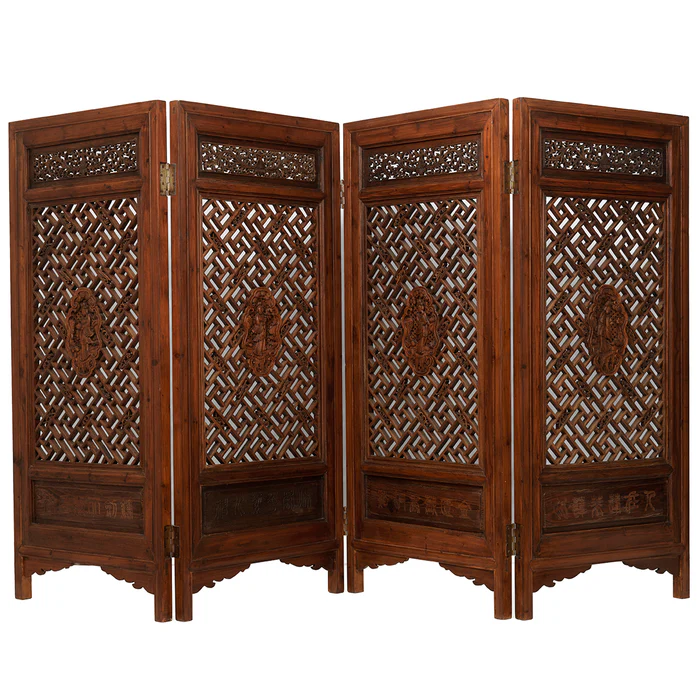
Chinese carved screens traditionally served as movable partitions within domestic interiors. In large courtyard homes, they shielded entrances from direct view, divided reception rooms, and created a sense of layered space. Folding screens with multiple hinged panels were common, as were fixed single panels placed on stands.
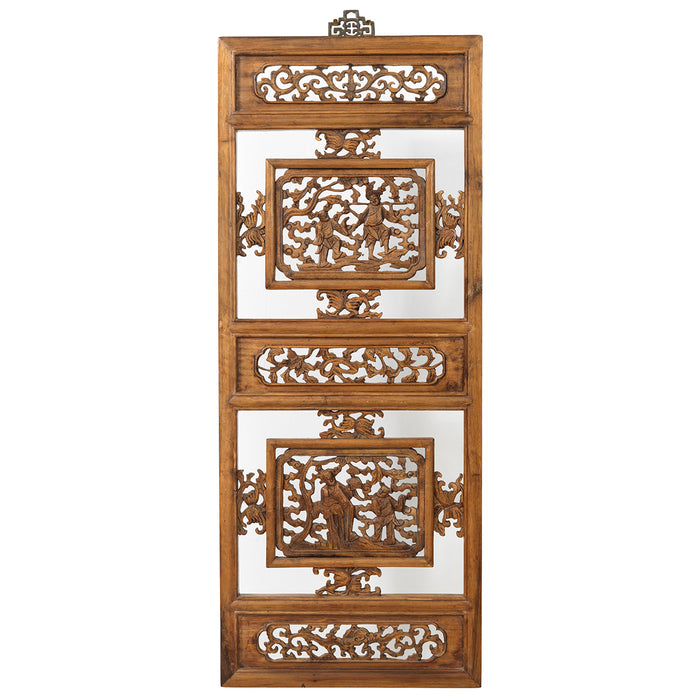
The artistry lies in the carving. Scenes from folklore, landscapes, floral motifs and auspicious symbols were cut in relief or pierced through the timber to create intricate openwork. The depth of carving, balance of composition and proportion of the frame all reflect the skill of the craftsman.
Original antique screens often date from the Qing dynasty, though earlier forms existed. Over time, the surface develops a patina that cannot be reproduced convincingly. Minor irregularities, subtle colour variation and evidence of hand tools are signs of genuine age.
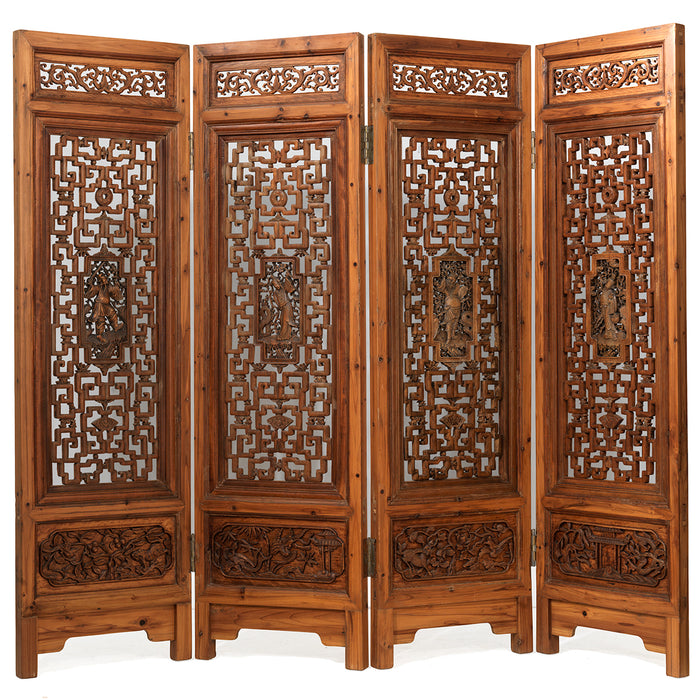
Today, chinese carved screens are used in both traditional and contemporary homes. Their restrained geometry and natural timber tones allow them to sit comfortably in modern settings, while more elaborate pieces become focal points within a room.
Screen Panels vs Wooden Window Panels
Buyers frequently compare screens with chinese wooden window panels. Although similar in carving style, their original purposes differ.
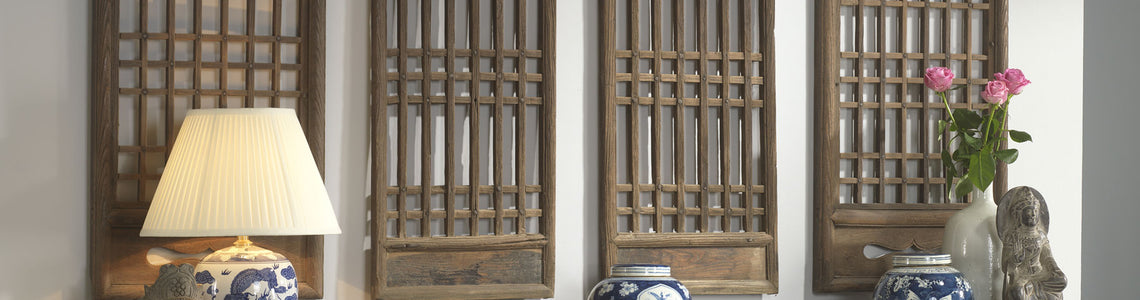
Screens were freestanding or semi-permanent interior partitions. Window panels, by contrast, formed part of a building’s architecture. Carved lattice windows allowed light and air into a property while maintaining privacy. When older buildings were dismantled, these panels were salvaged and later repurposed.
Reclaimed window panels are now widely used as wall art. Mounted individually or in symmetrical pairs, they introduce texture and depth to a plain wall. Their proportions are usually narrower and taller than folding screens, and they do not stand independently
When choosing between the two, consider your objective. If you wish to divide a space or soften the line between dining and living areas, a folding screen is the practical option. If you are looking to create a statement wall or add character to a hallway, antique window panels may be more suitable.
Shimu regularly sources both forms within our broader Chinese Country Furniture and antique collections, ensuring each piece retains its structural integrity and original character.
Tibetan Carvings and Regional Influences
Regional variation plays a significant role in carved decoration. Tibetan carvings, for example, tend to be bold, symbolic and deeply cut. Religious motifs, mythical creatures and protective symbols are common, reflecting the strong influence of Tibetan Buddhism.
By contrast, furniture from Shanxi province often features painted decoration layered over carved surfaces, with floral and auspicious imagery rendered in rich pigments. Northern elm pieces display a more restrained carving style, emphasising geometry and balanced composition.
Understanding these distinctions helps buyers select a piece aligned with their interior scheme. A Tibetan panel may suit a dramatic, layered interior, while a simpler northern carving complements a quieter space.
At Shimu, we work with long-standing contacts in Beijing and Shanghai to source antique pieces from across China’s regions. Each carved screen or panel is chosen for its authenticity, aesthetic balance and suitability within a modern home, then carefully restored to stabilise the structure without erasing the surface character built up over decades.
Functional Uses: Privacy, Zoning and Wall Art
In contemporary interiors, chinese carved screens perform several practical functions. They provide privacy in open-plan layouts, create defined zones without permanent walls, and soften large expanses of space.
A folding screen can conceal a workspace within a living room or form a backdrop behind a sofa. Single panels may be mounted as wall art, introducing architectural detail to otherwise plain surfaces. In commercial settings, such as hospitality venues or offices, carved screens offer a way to introduce character without major structural alteration.
Their adaptability explains their continued appeal. Unlike built-in partitions, they can be repositioned as layouts change. This flexibility is one reason why antique screens remain in demand among interior designers.
Those seeking complementary storage pieces often explore our Storage Cabinets and Sideboards to create a coherent scheme rooted in traditional Chinese craftsmanship.
How to Assess Quality and Age
Assessing authenticity begins with the wood itself. Genuine antique pieces show variation in tone, subtle surface wear and signs of historical repair. The back of the panel often reveals more about age than the front, as it is less likely to have been refinished.
Examine the carving closely. Hand-carved work displays slight irregularities and depth variation. Machine-carved replicas tend to appear uniform and overly precise. The edges of pierced carving should feel crisp yet natural, not sharp in a manufactured way.
Joinery provides further evidence. Traditional mortise and tenon construction indicates adherence to historical methods. Look for old peg holes and natural shrinkage gaps consistent with age. Excessively clean joints may suggest recent manufacture.
Restoration should stabilise rather than transform. At Shimu, our approach to antique furniture is to preserve the existing patina while addressing structural weaknesses. Surfaces are cleaned and lightly waxed, not stripped back to bare timber. This ensures that the history of the piece remains visible.
Finally, consider proportion and design integrity. Authentic screens were designed as complete compositions. Decorative panels added later to plain frames can signal later alteration.
Buying Authentic Carved Screens Online
Purchasing carved screens online requires confidence in the supplier. Detailed photography, clear dimensions and transparent descriptions are essential. A reputable specialist should provide information about provenance, restoration and materials.
Shimu offers nationwide delivery and an accommodating returns policy, allowing buyers to proceed with assurance. Our 3000 square foot showroom in West Yorkshire enables customers to view a large selection in person, while our online catalogue presents current stock clearly and accurately.
If you are seeking a specific regional style or dimension, we can assist through our sourcing service. Our long-standing relationships with suppliers in China enable us to locate individual antique pieces that meet precise requirements.
A carved screen is not a casual purchase. It is an investment in craftsmanship and cultural heritage. Selecting the right piece demands care, but when chosen well, it will serve as both functional furniture and lasting art.
Nkuku Throws
|
Chinese Wood Panel
|
Chinese Wardrobes
|
Chinese Wardrobe Cabinet
|
Chinese Wall Art
|
Oriental Trunk
|
Oriental Stoneware
|
Chinese Storage Chests
|
Chinese Antique Dealers London
|
Chinese Lamps
|
Chinese Ornaments
|
Chinese Coffee Table
|
Chinese Ginger Jar