


Antique Chinese Chairs
Antique Chinese chairs bring strong lines, skilled joinery and the character of aged timber into the home. At Shimu, we source original seating from China, selecting pieces for their proportions, condition and suitability for modern interiors. Our changing collection includes armchairs, side chairs and stools from different regions and periods, each with its own marks of age and use.
Original Chinese Antique Chairs from Shimu
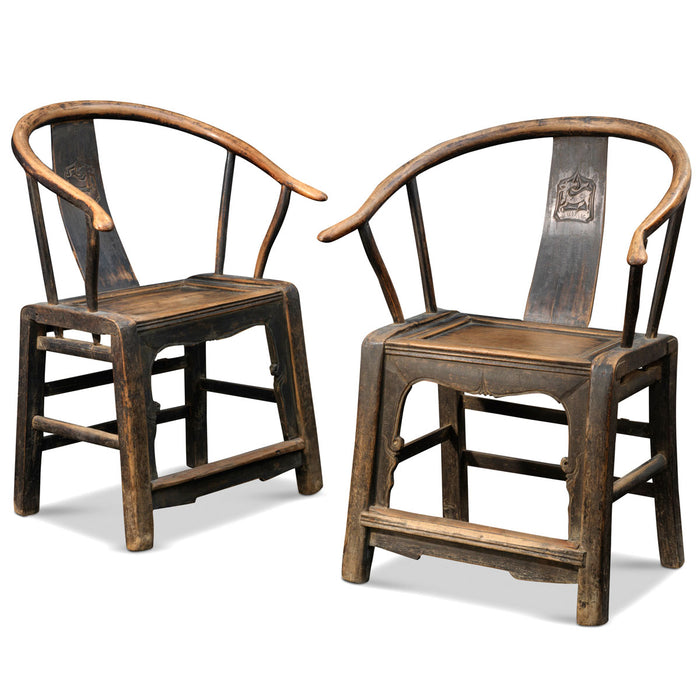
Shimu has specialised in Chinese furniture since 2003. We work with trusted suppliers in Beijing and Shanghai to find original furniture from across China, including chairs made for homes, halls and formal reception rooms.
Every antique chair is selected as an individual piece. We look at its shape, timber, construction and decorative detail, as well as how it will sit within a British home. Stock changes regularly as newly sourced pieces arrive, so a particular chair or matched pair may be available only once.
Our wider Chinese Antique Furniture collection includes cabinets, tables, chests and other pieces that can be placed alongside antique seating.

Traditional Chinese Chair Designs
Chinese chair design developed around clear proportions, practical construction and the natural qualities of wood. Some designs are restrained, while others carry carved panels, shaped aprons or painted decoration. The horseshoe chair is recognised by its curved back rail, which continues down into the arms. Its rounded outline gives it a formal yet comfortable appearance, making it well suited to a sitting room, bedroom or entrance hall. Yoke-back chairs have an upright frame and a raised top rail. The form is closely associated with Ming-style furniture, where balance and proportion often take precedence over heavy decoration.
Official’s hat chairs take their name from the shape of the crest rail, whose projecting ends recall the winged hats once worn by Chinese officials. These chairs have a strong architectural form and work particularly well as single statement pieces or matched pairs.
Shimu’s Oriental Occasional Chairs range may also include antique and traditionally made seating suited to less formal settings.
Ming Dynasty Chairs and Qing Dynasty Chairs
Ming-style chairs are valued for their clean lines, balanced frames and restrained use of decoration. Their appeal lies in careful proportions and skilled construction rather than applied ornament. This simplicity allows them to sit comfortably in both traditional and contemporary rooms.
Qing-style chairs may be heavier in appearance, with shaped panels, carving or more decorative aprons. Regional differences, later repairs and changes made during a chair’s working life can also affect its present form. Appearance alone does not provide a firm date. Timber, joinery, surface wear, restoration and provenance all need to be considered when assessing antique Chinese chairs.
Antique Chinese Wooden Chairs and Joinery
Elm was widely used for furniture in northern China and around Shanghai. It has a pronounced grain, a warm colour and sufficient strength for chairs intended for regular use. Other regional hardwoods were also used, depending on local supply and the wealth of the original owner.
Traditional Chinese chairs were commonly built with mortise-and-tenon joints. Carefully cut sections of wood fit into one another to form a stable frame, reducing the need for nails or screws. Signs of hand construction, old repairs and slight variations between components are often part of an antique chair’s appeal.
Customers drawn to this type of workmanship may also wish to view Shimu’s Chinese Classical Furniture, which is handmade using reclaimed elm and traditional methods.
A well-restored antique chair should be stable and practical while retaining the surface that gives it its character. Old colour, softened edges, minor marks and variations in the wood record decades of use. Removing these qualities can leave an antique looking flat and overly new.
Shimu’s restoration work is carried out with care. Loose joints may be repaired and damaged areas made sound, while the aged finish and natural patina are preserved wherever possible.
Some chairs carry carved animals, flowers or geometric forms. These were often chosen for particular cultural associations. Shimu’s guide to the hidden meanings in antique Chinese furniture gives further background on common decorative motifs.
Choosing an Antique Chinese Chair
Start with the chair’s intended use. A chair for daily seating should feel stable, have a suitable seat height and provide reasonable support. A more delicate example may be better used occasionally or placed as a decorative piece.
Check the dimensions carefully, particularly when buying an armchair for a desk or dining table. Look closely at the feet, joints, seat panel and any repaired areas. Variations in colour and surface wear are expected, though structural damage should be clearly described.
Shimu is happy to discuss individual pieces and provide further information where available. Customers can also visit our showroom in Greengates, West Yorkshire, to view much of our current antique stock in person.
Explore Shimu’s latest antique Chinese chairs, armchairs and stools online. As each antique is individual, stock is limited and changes throughout the year. We deliver across the UK and can arrange overseas delivery on request.
Rustic Reclaimed Wood Furniture | Reclaimed Pine Furniture | Mango Wood Furniture | Reclaimed Wood Furniture | Weaver Green Throws | Weaver Green Rugs | Weaver Green | Weaver Green Cushions | Mango Wood Shelving | Acacia Wood Furniture | Nkuku Garden Furniture | Mango Wood Furniture | Reclaimed Elm Furniture | Best Nkuku Floor Lamps | Best Nkuku Table Lamps | Best Nkuku Pendant lights | Rustic Reclaimed Wood Furniture | Best Nkuku Shelving Units | Best Nkuku Dining Chairs | Reclaimed Wood Console Tables | Reclaimed Wood Mirrors | Nkuku Baskets | Nkuku Cushions