


Antique Tibetan Cabinet
An antique Tibetan cabinet brings together old painted surfaces, practical storage and a furniture tradition quite distinct from the better-known Chinese styles. At Shimu, our selection of Tibetan furniture forms part of a wider collection of carefully sourced Chinese Antique Furniture, with individual pieces chosen for their age, form and suitability for a modern home.
Shimu stock includes a Tibetan altar cabinet dating from around 1880 and a matching pair of painted cabinets from around 1900. Both retain old painted decoration and the wear acquired over many decades, giving each piece an appearance that cannot be replicated by newly made furniture.
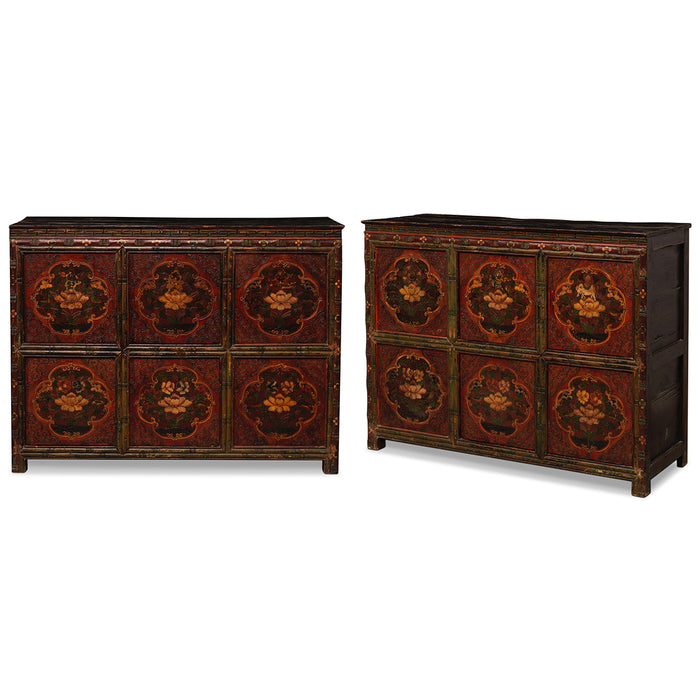
Tibetan Painted Cabinets with Original Decoration
Colour is one of the most recognisable qualities of a Tibetan painted cabinet. Traditional examples were often decorated across their front panels, using strong reds, blues, greens, yellows and creams. With age, these colours soften as the painted surface wears, producing the quieter tones found on surviving antique furniture.
Shimu’s Antique Tibetan Altar Cabinet, dated to circa 1880, retains old painted decoration across its doors. Lotus flowers appear in blue, cream, red and green, with the original brighter colours now considerably softened.
A pair of antique Tibetan painted cabinets from circa 1900 uses a broader palette of greens, yellows, blues and oranges over pine. The original black finish remains across the tops, worn sufficiently to reveal the timber beneath in places.
Antique Tibetan Altar Cabinets and Their Original Use
An antique Tibetan altar cabinet was made as useful storage rather than purely decorative furniture. Cabinets of this type were commonly used for religious documents, ceremonial robes and valued possessions. Shimu’s circa-1880 example has two central sets of doors giving access to the interior, with fixed outer panels and a removable shelf.
Construction can be comparatively simple. Pine and cedar were commonly used, and the emphasis was often placed on the painted front rather than elaborate cabinetmaking. This distinction gives Tibetan furniture much of its recognisable appearance.
For a present-day home, the broad top and enclosed interior make an altar cabinet practical in a living room, dining room or hallway. It can provide useful storage while leaving the old painted surface clearly visible.
Buddhist Symbols on Tibetan Furniture

The decoration found on antique Tibetan furniture often has religious meaning. On Shimu’s circa-1880 cabinet, lotus flowers appear prominently across the door panels. Within Tibetan Buddhist imagery, the lotus is associated with purity and awakening.
The pair dating from around 1900 carries a wider group of Buddhist symbols. Carved green surrounds resemble bamboo, while the painted panels include lotus flowers. Other images include an elephant, a Wind Horse and a dharma wheel. Shimu’s description identifies these respectively with strength and wisdom, good fortune and the Buddhist cycle of rebirth and release.
The second cabinet in the pair depicts the Buddhas of the past, present and future, each holding a fruit. These old paintings give the furniture cultural context beyond its decorative use.

Antique Tibetan Furniture in Contemporary Interiors
Despite their age and regional origins, Tibetan cabinets can work particularly well in present-day rooms. Their relatively simple rectangular forms make them easy to place, while the painted fronts bring colour without requiring other furniture in the room to follow the same style.
An antique painted cabinet can sit against a plain wall in a living room, provide storage in a dining room or serve as a substantial hallway piece. Customers looking beyond Tibetan furniture can also browse Shimu’s wider range of antique Chinese cabinets, where old lacquer, natural timber and painted surfaces offer different choices.
A genuine antique Tibetan cabinet should carry evidence of its history. Paint may be rubbed or faded, timber can show old marks, and repairs may have been made long before the piece reached its present owner.
Shimu’s circa-1880 altar cabinet, for instance, has evidence of earlier repairs around one leg, while part of its top appears to have been altered at some stage. The pair from circa 1900 retains worn paint and old black finishing over rustic pine.
Shimu restores antique furniture with care while retaining the aged surfaces and patina that have developed over time. The company works with suppliers in China to source old furniture and has specialised in Chinese and oriental furniture since 2003.
Choosing an Antique Tibetan Cabinet
Measurements should come first, followed by storage requirements and condition. Check the internal shelves and door arrangement, as well as the depth of the cabinet and the space needed around it. With antique painted furniture, examine the surface closely so you understand where paint has worn, where repairs have been made and how the colours vary.
Each old piece is individual, so Shimu provides detailed descriptions and photographs for its current stock. The broader Oriental Cabinets collection is also worth browsing if you would like to compare Tibetan pieces with other Asian cabinet forms.
Shimu has specialised in Chinese and oriental furniture since 2003, sourcing antique pieces through established contacts in China and offering them alongside traditionally made collections. Our stock changes as individual antiques are found, including occasional Tibetan cabinets with original painted surfaces. Browse Shimu online or visit our West Yorkshire showroom to view current pieces in person.
Nkuku Throws | Chinese Wood Panel | Chinese Wardrobes | Chinese Wardrobe Cabinet | Chinese Wall Art | Oriental Trunk | Oriental Stoneware | Chinese Storage Chests | Chinese Antique Dealers London | Chinese Lamps | Apothecary Cabinet | Chinese Ornaments | Chinese Coffee Table | Chinese Ginger Jar