

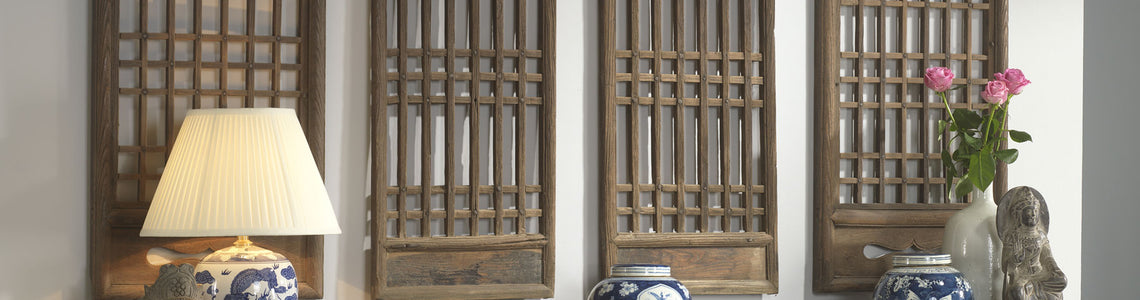
Antique Carved Wood Panels in the Chinese Tradition
Antique carved wood panels occupy a particular place within the Chinese decorative tradition. They were never made as casual ornaments. These panels formed part of the fabric of a house, temple, or courtyard, serving as screens, wall sections, door infills, or architectural dividers. Carved by hand and intended to endure, they combined structural purpose with cultural expression, often conveying ideas of prosperity, learning, harmony, or protection through their imagery.
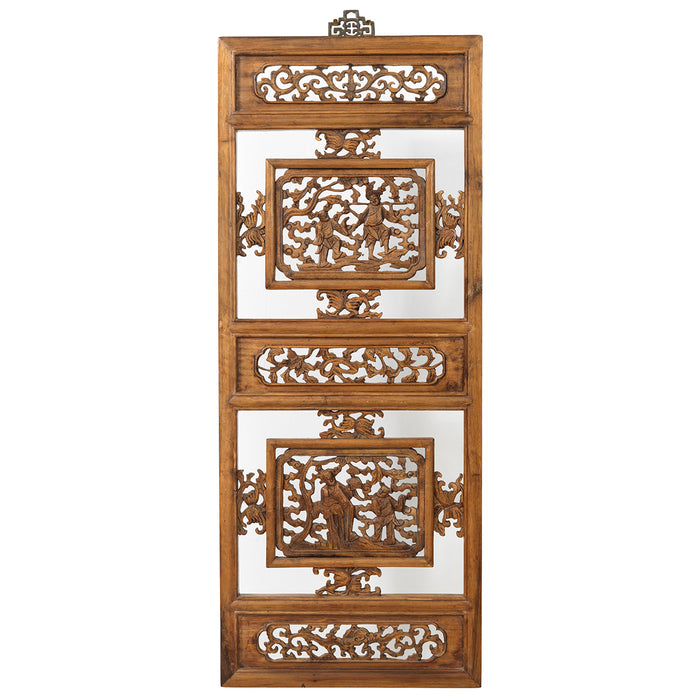
What sets antique carved wood panels apart is the authority of their workmanship. The depth of carving, the confidence of line, and the softened surfaces created by decades of use give them a presence that cannot be reproduced convincingly. In a modern interior, an antique Chinese wall panel reads less as decoration and more as a fragment of architectural history, bringing weight and calm to contemporary spaces.
At Shimu, antique carved wood panels are treated with the respect they deserve. Each piece is selected for the quality of its carving, the integrity of its timber, and its ability to sit comfortably in today’s homes without losing its historical character. This approach reflects Shimu’s long-standing specialism in authentic Chinese furniture and architectural elements, sourced, restored, and presented with a clear understanding of their original purpose and lasting value.
Qing Dynasty Carved Wood Panels: Craft, Symbolism, and Status
Qing dynasty carved wood panels represent the high point of Chinese domestic wood carving. Produced from the mid-seventeenth century through to the early twentieth, these panels were commissioned for private residences, scholar’s houses, and courtyard homes where craftsmanship was expected to reflect education, status, and taste. The quality of carving was immediately legible to visitors. Depth, clarity, and balance mattered, and anything crude or hurried would have been seen as a failing.
The carving itself was typically executed in layered relief, allowing scenes to unfold across different depths of timber. Common subjects included scholars in gardens, landscapes, mythical creatures, and auspicious symbols associated with longevity, wealth, and harmony. These images were not chosen at random. A Qing dynasty carved wood panel often functioned as a quiet statement of values, expressing respect for learning, order, and continuity rather than display for its own sake.
Material choice was equally important. Dense hardwoods such as elm were favoured for their strength and fine grain, allowing carvers to achieve crisp detail without fragility. Over time, handling, smoke, and natural oxidation softened the surfaces, producing the patina that collectors value today. This ageing process cannot be rushed or fabricated; it is the result of use and environment rather than intention.
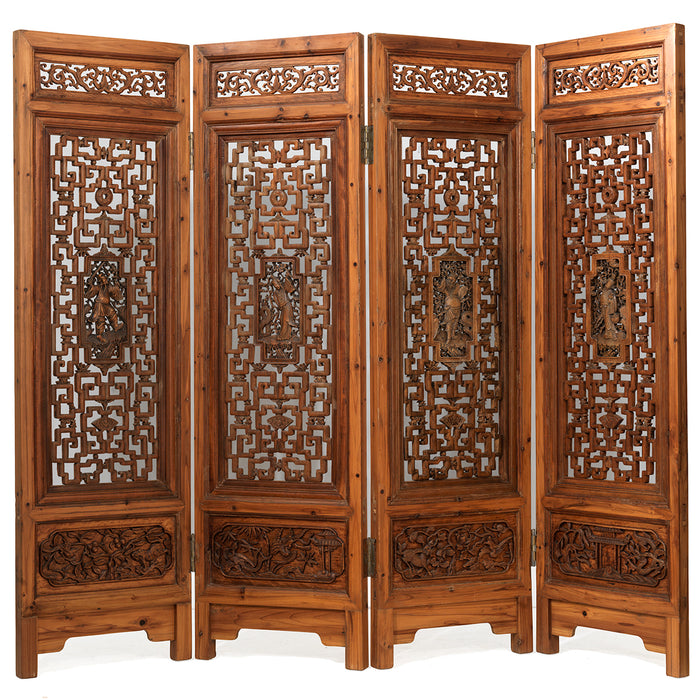
Shimu’s approach to Qing dynasty carved wood panels reflects an understanding of this context. Panels are chosen not only for visual appeal but for the assurance that their carving, subject matter, and condition align with the standards expected of genuine period work. Restoration is kept restrained, preserving the authority and quiet confidence that define authentic Qing carving, while ensuring each panel remains suitable for use in a modern interior.
Antique Chinese Wall Panels as Interior Features
Antique Chinese wall panels were originally integrated into buildings rather than applied as surface decoration. They formed part of screens, partitions, doorways, and fixed wall sections, giving structure to a room while introducing carved detail at eye level. This architectural role is important when considering how such panels are used today. They carry a sense of proportion and authority that feels settled rather than ornamental.
In contemporary interiors, an antique Chinese wall panel works best when allowed to breathe. Set against a plain wall, mounted as a single feature, or framed within a recess, the carving gains clarity and purpose. The aged timber provides contrast against modern plaster, stone, or painted surfaces, while the depth of relief introduces shadow and texture that flat artwork cannot achieve.
Scale is central to their success. Larger panels suit open living spaces, stairwells, or entrance halls where they echo their original function as dividing elements. Smaller examples can be used above consoles or within alcoves, offering a point of focus without overwhelming the room. Lighting plays a quiet but decisive role, with soft side lighting bringing out carving depth and surface patina.
Shimu selects antique Chinese wall panels with modern interiors in mind. Each piece is assessed for balance, condition, and presence, ensuring it can stand confidently on its own while retaining the marks of age that give it meaning. The result is a panel that reads not as an accessory, but as a considered architectural element with history and weight.
Authenticity, Age, and Restoration Considerations
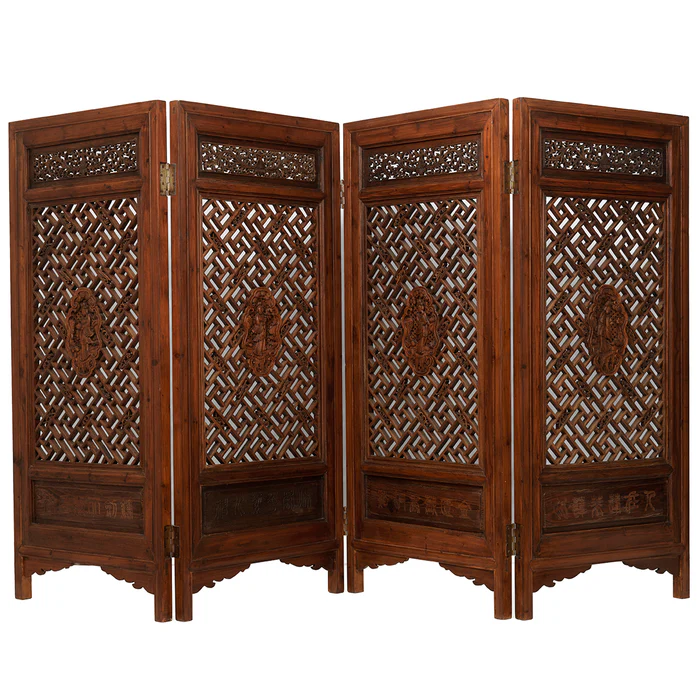
Authentic antique carved wood panels carry their history openly. Subtle irregularities in carving, softened edges, small repairs, and variations in tone are all part of a panel’s record of use. These signs should not be mistaken for damage. They are the natural result of decades, sometimes centuries, of exposure to domestic life, climate, and handling. Uniform surfaces or aggressively sharp detail are more often signs of later reproduction than of genuine age.
Restoration, when required, must be handled with restraint. The aim is stability rather than renewal. Cracks may be secured, joints strengthened, and surfaces cleaned, but the character formed over time should remain intact. Over-restored panels lose credibility, becoming decorative objects rather than historical material. Shimu applies a conservative approach, ensuring that any intervention supports longevity without erasing the panel’s past. This balance is essential if an antique carved wood panel is to retain both its visual authority and its value.
Carved Wood Panels for Sale at Shimu
The carved wood panels for sale at Shimu are sourced with a clear set of priorities. Provenance, quality of carving, and suitability for modern interiors all matter. Panels are selected for their presence rather than novelty, favouring depth of relief, balanced composition, and honest wear. Many originate from domestic architecture, where they once formed part of screens or wall structures, lending them a natural sense of proportion.
Shimu’s panels sit comfortably within the wider Chinese Antique Furniture collection, where architectural elements are treated with the same care as cabinets or tables. Each piece is assessed in person before restoration, ensuring it can be mounted or displayed securely in a UK home. Practical considerations such as weight, fixing methods, and environmental stability are addressed so that the panel can be enjoyed daily rather than stored away.
When introduced thoughtfully, antique carved wood panels bring calm and depth to modern interiors. They work particularly well where clean lines and open space allow the carving to stand on its own. A single panel can anchor a room, while paired panels create rhythm and balance without repetition. Positioning at eye level maintains their original architectural logic and avoids treating them as flat artwork.
Lighting should remain understated. Soft directional light enhances relief and surface texture, allowing shadows to reveal the hand of the carver. The surrounding materials should be kept quiet, letting the panel’s aged timber and measured detail speak for itself. Used in this way, an antique panel becomes part of the structure of a room rather than an applied feature.
Nkuku Throws | Chinese Wood Panel | Chinese Wardrobes | Chinese Wardrobe Cabinet | Chinese Wall Art | Oriental Trunk | Oriental Stoneware | Chinese Storage Chests | Chinese Antique Dealers London | Chinese Lamps | Chinese Ornaments | Chinese Coffee Table | Chinese Ginger Jar