


Fine Details, Timeless Craft: How to Read the Language of Chinese Furniture
Antique Chinese furniture offers more than surface appeal. Its structure, decoration and materials all carry meaning. These details help identify a piece’s age, region and original use. For collectors or first-time buyers, knowing what to look for can make all the difference.
Joinery and Construction
The first sign of quality in Chinese furniture is often hidden in the joinery. Traditional makers used mortise and tenon joints to assemble pieces. There are no screws or nails. This method provides strength and allows the wood to move naturally with changes in humidity. If you see clean, precise joinery, you are likely looking at a piece that was made with care.
You can often tell a piece’s purpose by its structure. A cabinet built with heavier frames and recessed panels may have been used for storage in colder northern homes, where stability was key. In contrast, lighter joinery with more delicate proportions suggests southern influence, where air flow and portability mattered more.
The way panels fit into frames can also offer clues. Floating panels in table tops or cabinet doors show that the maker understood how wood behaves over time. Frames that have held up for a century or more suggest good craftsmanship and the right choice of materials.
Carvings and Symbolism
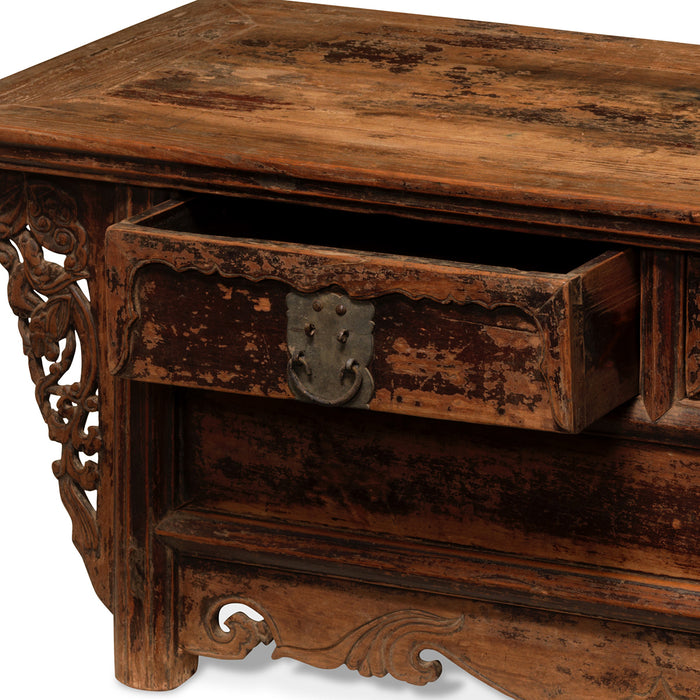
Carving is another layer of meaning. Floral motifs, animals and geometric patterns all have cultural significance. Bats stand for happiness, while peaches symbolise long life. Dragons often appear on official or ceremonial pieces and suggest status.
The depth and detail of carving may hint at region or period. In Shanxi, for example, intricate work is common, especially on altar cabinets. In contrast, southern pieces may favour lighter, more fluid designs. A skilled carver shapes not just the surface, but the story the piece tells.
Lacquer, Paint and Patina
Lacquer finishes in Chinese furniture are not just decorative. They serve a practical purpose: protecting the wood from moisture and wear. At the same time, they reflect social status, regional styles and even spiritual beliefs.
Black lacquer is often linked with formality and was used in official or upper-class settings. It gives furniture a sense of weight and calm. Red lacquer, on the other hand, is more commonly found in homes. It represents luck, warmth and celebration, especially in the north of China.
Older lacquer often shows fine cracks across the surface. This is called craquelure. It happens naturally as the lacquer hardens and shifts with the wood over time. These marks do not damage the piece. They show age, and they suggest the furniture was made with traditional methods.
You can also spot brush strokes or slight unevenness in hand-applied finishes. These signs mean it was likely made by a skilled craftsman, not mass produced. On some pieces, the lacquer may have worn away at edges and corners. This is normal. In fact, it’s one of the clearest signs you’re looking at something with real history.
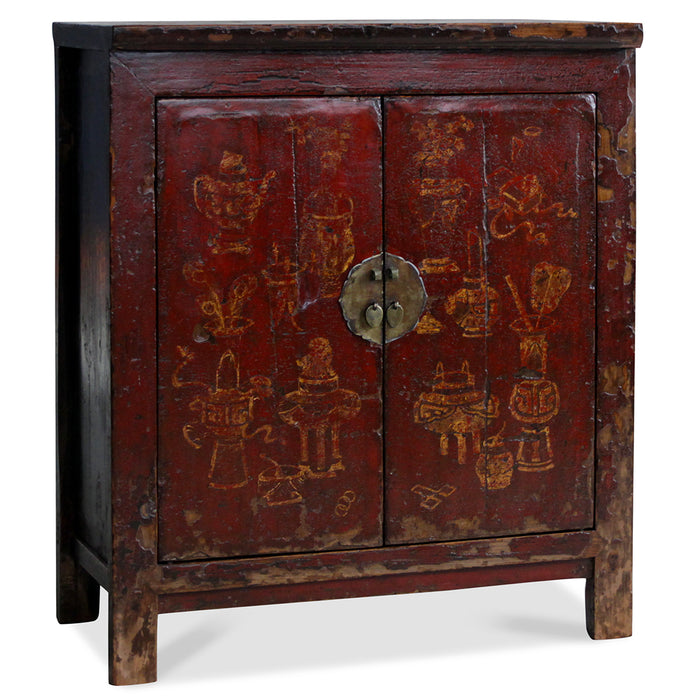
Painted designs add further layers. Scenes of birds, mountains, or figures can hint at the region a piece came from. In some cases, they suggest that the item was a wedding gift or used in a shrine or temple. Even if the images are faded, they still help to place the piece in context.
Lacquer tells you how the furniture was made, where it might have come from, and how it was used. Look closely, and it will tell you more than just the colour.
Wood and Grain
Chinese furniture often used local hardwoods such as elm, walnut and camphor. The grain of elm is distinctive, with a loose, flowing pattern that works well on larger surfaces. Walnut is finer and often used on furniture that required a more polished look.
The feel and tone of the wood can also give information. Old wood tends to soften in colour and lose its gloss. This does not make it less attractive. In fact, it adds depth and richness. Furniture made from reclaimed wood is another area of interest. These pieces combine old materials with modern craftsmanship, often creating something unique.
Hardware and Fittings
Brass hardware is common across many types of Chinese furniture. Look at the shape of handles and lock plates. Round lock plates are associated with harmony and balance. Square or angular fittings tend to signal structure and order. The patina on the metal can also give a clue to age. Older hardware often shows signs of hand tooling and wear.
The placement of fittings is practical, but it is also part of the overall design. Good hardware should feel like a natural extension of the wood, not an afterthought.
Putting It All Together
A good example is a lacquered sideboard from Shanxi with carved panels and brass fittings. The structure is solid, the carving detailed, the lacquer worn but rich. Each part of the piece tells you something. Another example might be a simple altar table with floating panels, soft elm grain and no decoration. Its beauty lies in restraint and proportion.
When you look at antique Chinese furniture, take your time. Examine the joints, run your hand over the surface, look closely at the fittings. Each piece has its own logic and rhythm. The more you notice, the more you will understand.
Chinese furniture was designed to last and to speak. If you know what to look for, you begin to see how each element fits into a wider tradition of craft, culture and design. Whether you are furnishing a home or building a collection, the detail will guide you.



laissez un commentaire